

Is Your Business Wasting Advertising Budget on Poorly Targeted Campaigns?
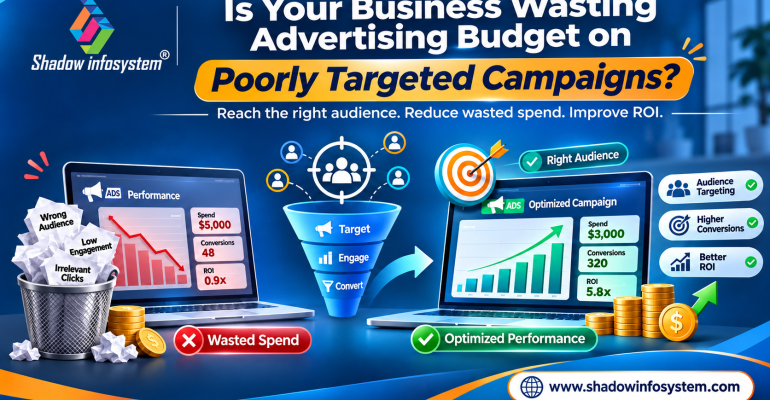
Is Your Business Wasting Advertising Budget on Poorly Targeted Campaigns?
 Kumar Rajesh
Advertising is an important part of business growth, but achieving meaningful results requires more than launching campaigns and allocating a budget. Businesses need to reach relevant audiences, communicate the right message, and choose advertising strategies that support their goals. With the right planning, Google Ads and Meta Ads can help businesses connect with potential customers and generate valuable opportunities.
A successful campaign begins with understanding customer behaviour, identifying relevant search terms, selecting suitable audiences, and defining measurable objectives. When these elements work together, businesses can make informed decisions about their advertising investments and improve campaign performance.
This is where a strategic, data-driven approach to Programmatic Marketing makes a difference. By combining audience insights, automation, media planning, and continuous performance analysis, businesses can develop advertising campaigns that are more closely aligned with their marketing objectives.
Why Poorly Targeted Advertising Campaigns Affect Business Growth
Before increasing an advertising budget, businesses need to understand whether their campaigns are reaching the right people and supporting the right objectives.
Here are several issues that can affect performance:
1. Reaching the Wrong Audience
An advertisement may receive thousands of impressions but generate very few relevant enquiries if it reaches people who have little interest in the offering.
Effective targeting starts with understanding customer requirements, purchasing intent, location, interests, and behaviour. The more closely the campaign aligns with the intended audience, the greater its opportunity to generate relevant engagement.
2. Spending on Irrelevant Keywords
In Google Ads, keyword selection plays an important role in determining which searches can trigger advertisements. Broad or poorly researched keywords may attract users looking for information rather than a product or service.
Keyword research, search intent analysis, and negative keyword management help businesses refine their campaigns and reduce avoidable spending on irrelevant searches.
3. Getting Clicks Without Meaningful Conversions
Clicks and impressions indicate activity, but they do not necessarily demonstrate business success. A campaign may attract visitors who leave the website without making an enquiry or completing a purchase.
This can happen because the advertisement does not match the landing page, the offer is unclear, or the next step is difficult to understand. In some cases, the campaign may be attracting the wrong audience from the beginning.
To understand the real issue, businesses need to examine the complete customer journey, from the first advertisement to the final conversion.
4. Running Campaigns Without Clear Objectives
Every advertising campaign should have a defined purpose. A business aiming to generate qualified leads requires a different strategy from one trying to increase brand awareness or online sales.
When objectives are unclear, it becomes difficult to choose suitable targeting settings, allocate budgets, select performance indicators, and evaluate results.
A structured advertising strategy connects campaign activities with specific business goals and provides a clearer basis for measuring progress.
How Programmatic Marketing Helps Improve Advertising Performance
Programmatic Marketing uses data, automation, audience insights, and performance analysis to support more informed marketing decisions. Programmatic advertising specifically involves automated processes for buying and delivering advertising inventory, while a broader programmatic marketing approach can include audience planning, campaign execution, measurement, and optimization.
For businesses advertising through Google Ads and Meta Ads, automation and data-driven decision-making can help improve campaign management. Both platforms provide targeting options, automated bidding capabilities, reporting tools, and campaign optimization features.
However, automation alone does not guarantee better results. Campaign performance still depends on the quality of the strategy, the relevance of the audience, the accuracy of conversion tracking, and the offer being promoted.
Google Ads: Connect with Customers Showing Search Intent
Google Ads enables businesses to reach users searching for relevant products, services, and solutions. This makes keyword selection and search intent important parts of campaign planning.
An effective Google Ads strategy may include:
- Keyword research: Identifying search terms that match the business’s offerings and customer requirements.
- Search intent analysis: Prioritizing keywords that align with the campaign objective and likely customer needs.
- Negative keyword selection: Excluding irrelevant searches that may consume advertising budget.
- Location targeting: Focusing on geographical areas relevant to the business.
- Ad and landing page alignment: Ensuring that the advertisement communicates an offer consistent with the destination page.
- Conversion tracking: Measuring meaningful actions such as qualified enquiries, calls, form submissions, or purchases.
Meta Ads: Reach Relevant Audiences on Facebook and Instagram
Meta Ads can support brand awareness, lead generation, customer engagement, and sales across eligible Facebook and Instagram placements.
Unlike search campaigns, Meta Ads can reach potential customers who may not be actively searching for a solution at that moment. Audience signals, relevant creatives, campaign objectives, and available performance data help guide delivery.
A well-planned Meta Ads campaign may involve:
- Audience research: Understanding customer interests, needs, and relevant audience characteristics.
- Creative planning: Developing advertisements that communicate the business’s value clearly.
- Objective selection: Aligning the campaign with awareness, traffic, lead generation, or sales goals.
- Placement evaluation: Reviewing performance across eligible placements and using suitable placement settings.
- Retargeting: Re-engaging eligible previous website visitors or people who interacted with the business, where appropriate data and permissions are available.
- Performance analysis: Evaluating lead quality, conversion rates, and cost per result rather than relying only on engagement.
Shadow infosystem: Your Programmatic Marketing Partner in Noida
Shadow infosystem is a leading programmatic marketing company in Noida, with 17+ years of experience delivering technology-driven business solutions and developing strategies aligned with business requirements. We specialize in Programmatic Marketing services focused on Google Ads and Meta Ads, helping businesses plan, manage, and optimize advertising campaigns with a data-driven approach.
We understand that every business has distinct objectives, customer profiles, and market requirements. Our approach combines campaign research, strategic planning, audience selection, and performance measurement to develop advertising strategies suited to these needs.
From identifying relevant keywords to preparing media plans and evaluating campaign results, we focus on making advertising decisions purposeful and measurable. Our goal is to help businesses connect with relevant audiences and build advertising campaigns that support their growth priorities.
Our Proven Programmatic Marketing Strategy
At Shadow infosystem, we follow a structured process that connects business objectives with audience research, campaign planning, execution, and performance optimization. Each stage contributes to a strategy designed around the client’s requirements.
Step 1: Understanding Business Goals and Campaign Objectives
We begin by understanding your business model, products or services, target market, and expected outcomes. This helps us determine whether the campaign should focus on lead generation, sales, brand awareness, website traffic, or a combination of objectives across separate campaigns.
Step 2: Conducting Keyword and Audience Research
“Reach the Right Audience with the Right Message at the Right Time.”
Our research process identifies opportunities to reach the right people through the appropriate advertising platform.
For Google Ads, we examine keyword relevance, search intent, competition, and available search demand. We also identify negative keywords where appropriate to refine targeting and improve the relevance of search traffic.
For Meta Ads, we assess audience characteristics, customer interests, available engagement data, and creative requirements. These insights help determine suitable targeting approaches for the campaign.
Step 3: Developing a Strategic Media Plan
Once the objectives and research are established, we prepare a media plan that connects the campaign strategy with budget allocation and execution.
Our media planning considers:
- Target audience and geographical coverage.
- Selection of Google Ads and Meta Ads campaign types.
- Budget allocation and bidding approach.
- Keyword groups, creatives, and eligible placements.
- Campaign timelines and testing requirements.
- Performance metrics and conversion tracking.
The media plan is developed according to the business’s objectives, available budget, and campaign requirements. Performance data can then guide adjustments as the campaign progresses.
Step 4: Setting KPIs and Conversion Tracking
We identify Key Performance Indicators (KPIs) that help evaluate campaign performance against its objectives.
Depending on the campaign, these may include qualified leads, cost per lead, conversion rate, cost per acquisition, click-through rate, sales, and return on ad spend.
For lead generation campaigns, we consider the quality and relevance of enquiries alongside their cost. For sales campaigns, purchase performance and revenue-related metrics provide important insights.
We also focus on appropriate conversion tracking so that campaign decisions are supported by reliable performance data.
Step 5: Campaign Execution and Optimization
“Turn Campaign Insights into Smarter Decisions and Better Performance.”
After planning and tracking requirements are established, we implement the campaigns using the selected platform settings, targeting approach, creatives, and budget.
We monitor available performance data to understand which keywords, audiences, advertisements, and placements are contributing to campaign objectives. Based on these insights, we refine campaign settings, test creative variations, adjust targeting, and review budget allocation where appropriate.
This ongoing process helps keep campaigns aligned with changing performance patterns and business priorities.
Step 6: Performance Analysis and Reporting
“Turn Campaign Performance into More Leads, Higher Conversions, and Greater Revenue”
We review campaign results against the established KPIs and provide insights into performance trends, spending, conversions, and potential areas for improvement.
The findings help businesses understand how their campaigns are progressing and which adjustments may support better results. Regular analysis also provides a foundation for future campaign planning and budget decisions.
How Shadow infosystem Measures and Optimizes Advertising Performance
At Shadow infosystem, Programmatic Marketing involves more than launching advertisements and monitoring clicks. Our approach connects business objectives, audience research, keyword selection, media planning, and conversion tracking with performance indicators that help evaluate campaign effectiveness. We focus on understanding how advertising spend contributes to relevant enquiries, qualified leads, and customer acquisition.
Depending on the campaign objectives, we evaluate the following key performance metrics:
| Performance Metric | What It Measures | How It Helps |
| CPL (Cost Per Lead) | The average advertising cost incurred to generate one lead. | Helps evaluate lead generation costs and identify opportunities to improve campaign efficiency. |
| Cost Per Qualified Lead | The advertising cost associated with generating a lead that meets the business’s qualification criteria. | Helps assess whether campaigns are attracting relevant prospects rather than simply generating a high volume of enquiries. |
| Conversion Rate | The percentage of users who complete a defined action, such as submitting an enquiry form or making a purchase. | Helps identify how effectively advertisements, landing pages, and offers encourage users to take the desired action. |
| CPA (Cost Per Acquisition) | The average advertising cost of acquiring a customer or achieving another defined acquisition outcome. | Helps businesses evaluate acquisition costs against their commercial objectives and revenue potential. |
How These Metrics Guide Our Campaign Strategy
1. Evaluating CPL
We review advertising spend alongside the number of leads generated to understand the average cost of each enquiry. Keyword relevance, audience targeting, campaign structure, and landing-page performance can influence CPL. Our optimization process uses available campaign data to identify areas where spending and targeting may need adjustment.
2. Focusing on Qualified Leads
Generating enquiries is only one part of a successful lead generation campaign. We consider lead quality and the business’s qualification criteria to understand whether advertising is attracting potential customers with relevant requirements. This helps distinguish between campaigns that generate more enquiries and those that generate more commercially relevant opportunities.
3. Improving Conversion Rate
Conversion tracking helps evaluate whether users complete the intended action after interacting with an advertisement. We review relevant factors such as keyword intent, audience relevance, ad messaging, landing-page alignment, and the enquiry process to identify potential barriers to conversion.
4. Assessing CPA
For campaigns focused on customer acquisition, we examine the cost associated with acquiring customers or achieving the defined acquisition outcome. Where reliable conversion and revenue data are available, these insights can help businesses evaluate acquisition efficiency and make more informed budget allocation decisions.
By reviewing these metrics together, Shadow infosystem develops a more complete understanding of campaign performance. Rather than evaluating advertising success through clicks or lead volume alone, our approach considers cost efficiency, lead quality, conversions, and business objectives to guide ongoing campaign optimization.
Why Shadow infosystem is the Right Choice for Programmatic Marketing
At Shadow infosystem, we treat Programmatic Marketing as a strategic, data-driven process, not just running ads on digital platforms. Our focus is on understanding business objectives, identifying relevant audiences, planning campaigns, and using performance insights to guide optimization.
We aim to be the best Programmatic Marketing company for businesses that want a structured and accountable approach to advertising across Google Ads and Meta Ads.
Our process focuses on the factors that influence campaign performance:
- 17+ Years of Experience: We bring extensive experience in technology-driven business solutions and an understanding of business requirements across different industries.
- Google Ads and Meta Ads Specialization: We plan campaigns according to the targeting options, capabilities, and objectives of each platform.
- Research-Based Strategy: We use keyword research, search intent analysis, and audience insights to guide campaign planning.
- Customized Media Planning: We align budget allocation, campaign structure, targeting, and creative requirements with your business objectives.
- KPI-Focused Performance Measurement: We establish relevant indicators to evaluate campaign effectiveness and identify optimization opportunities.
- Continuous Optimization: We analyze campaign data and refine strategies to keep advertising activities aligned with business goals.
- Business-Oriented Approach: We focus on the outcomes that matter to your business, from qualified enquiries and customer acquisition to sales and brand awareness.
Build a Smarter Advertising Strategy with Shadow infosystem
Effective advertising starts with a clear objective, a well-researched audience, and a strategy that connects campaign activities with business goals. With the right combination of keyword research, audience targeting, media planning, and performance optimization, Google Ads and Meta Ads can become valuable channels for reaching potential customers.
At Shadow infosystem, we bring these elements together through our Programmatic Marketing services, helping businesses develop structured advertising campaigns aligned with their objectives.
Ready to take your advertising strategy to the next level?
Connect with Shadow infosystem to discuss your business goals and develop a Programmatic Marketing strategy tailored to your audience, budget, and growth plans.